
InCabin Europe 2026: 3 Takeaways Shaping the Future Cabin

InCabin Europe 2026 brought together the people shaping what happens inside the vehicle – from driver and occupant monitoring to HMI, audio, comfort and wellbeing. Co-located with AutoSens in Barcelona from 22 to 24 September, it showed an industry thinking well beyond compliance.
From Smart Cockpit to Agentic Cabin: Why China Is Setting the Pace
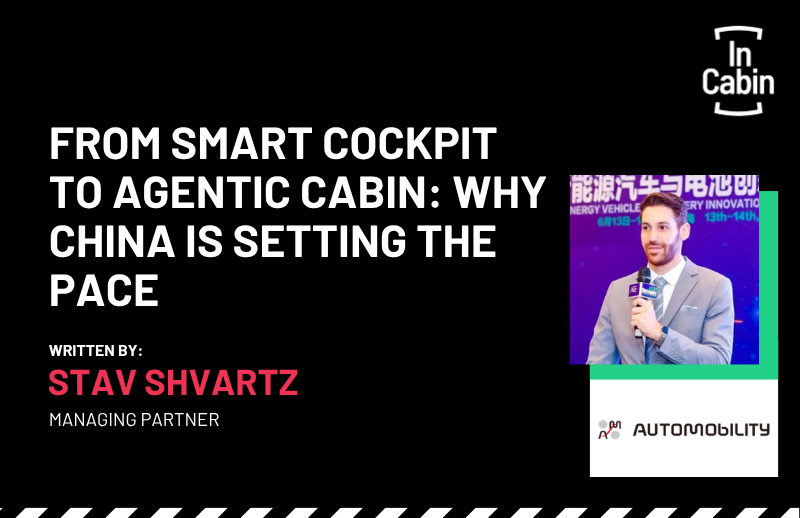
For years, the “smart cockpit” was largely defined by better displays, richer infotainment, and increasingly capable voice assistants. China is now pushing the architecture toward something more consequential: the agentic cabin, a system that can perceive occupants and context, understand intent, reason across domains, and initiate actions.
Scaling Digital Cockpit Software Delivery for Global Markets

Deploying digital cockpit software globally involves far more than adapting language. Regional regulations, digital ecosystems, connected services and customer expectations can all influence how software is designed, validated and delivered.
Yuzhong Wang, Software Delivery Manager – Digital Cockpit EMEA at NIO GmbH, discusses how modular architectures, continuous deployment and post-launch data can help OEMs scale cockpit software across markets while maintaining quality and consistency.
The Future of Automotive Interiors Through a Global UX Lens

Electrification, software-defined vehicles, artificial intelligence, and evolving regulations are reshaping not only how vehicles are engineered, but also how customers experience them.
At the same time, consumer expectations are becoming increasingly regional. Markets such as Europe, North America, and China are evolving at different speeds and often prioritise different aspects of the mobility experience. For designers, understanding these cultural, technological, and behavioural differences is becoming just as important as keeping pace with the latest innovations. Against this backdrop, here are my thoughts on four key topics shaping the future of automotive interiors.
Building the Unified AI Stack for Software-Defined Vehicles

As vehicles become increasingly software-defined, the challenge is no longer adding more AI features- it’s creating an architecture that allows them to work together.
In this interview, Natalie Stormanns, Head of Infotainment and Digital Experience at MHP – A Porsche Company, explores why unified AI stacks, centralized compute, and integrated vehicle and cabin data are becoming essential to delivering safer, more intelligent, and more personalised driving experiences.
Engineering for Adaptability: Lessons from China’s Fastest-Moving Automotive Market with Autoliv
In this interview, Autoliv shares insights on how its engineering teams are meeting the challenges of integration, functional safety, and user-centric design — and why collaboration platforms like InCabin are vital for advancing innovation and ensuring the future of safe, adaptive mobility.
Driving HMI Innovation: Cirrus Logic on Evolving Automotive Haptics
At InCabin USA 2025, Cirrus Logic returns to the conversation with fresh insights on how automotive haptics are evolving from bespoke experiments to standardized, scalable solutions