
Hirain on the Future of Camera Monitor Systems and AR-HUD
Explore how Hirain is advancing Camera Monitor Systems, 3D AR-HUD and intelligent cockpit technology with AI, optics and low-latency processing.
InCabin Europe 2026: 3 Takeaways Shaping the Future Cabin

InCabin Europe 2026 brought together the people shaping what happens inside the vehicle – from driver and occupant monitoring to HMI, audio, comfort and wellbeing. Co-located with AutoSens in Barcelona from 22 to 24 September, it showed an industry thinking well beyond compliance.
From Smart Cockpit to Agentic Cabin: Why China Is Setting the Pace

For years, the “smart cockpit” was largely defined by better displays, richer infotainment, and increasingly capable voice assistants. China is now pushing the architecture toward something more consequential: the agentic cabin, a system that can perceive occupants and context, understand intent, reason across domains, and initiate actions.
AI Agents Are Redefining the Future of the Software-Defined Cockpit

From voice-first interaction and intelligent assistants to AI-optimised hardware, the next generation of automotive cockpits will be built around agentic AI.
Yu Yang, Principal Lead Analyst – Automotives & Robotics at Yole Group and Advisor on the InCabin China Advisory Board explores how this shift is changing vehicle architecture, semiconductor requirements and the future of human-vehicle interaction.
What Comes Next for DMS+OMS: A Conversation with Tobii

We spoke to Carmen Pătrașcu, who leads Tobii’s interior sensing Sales and Marketing, about what comes after the world’s first single-camera DMS+OMS solution reaches the road, and how broader adoption can open the next chapter of interior sensing.
As Head of Sales and Marketing, Carmen works where Autosense technology meets the market. Her focus is not only on turning complex engineering into a clear proposition, but also on understanding what different OEMs and Tier 1s need to move from interest to implementation.
How Multimodal Sensing Is Transforming Occupant Monitoring
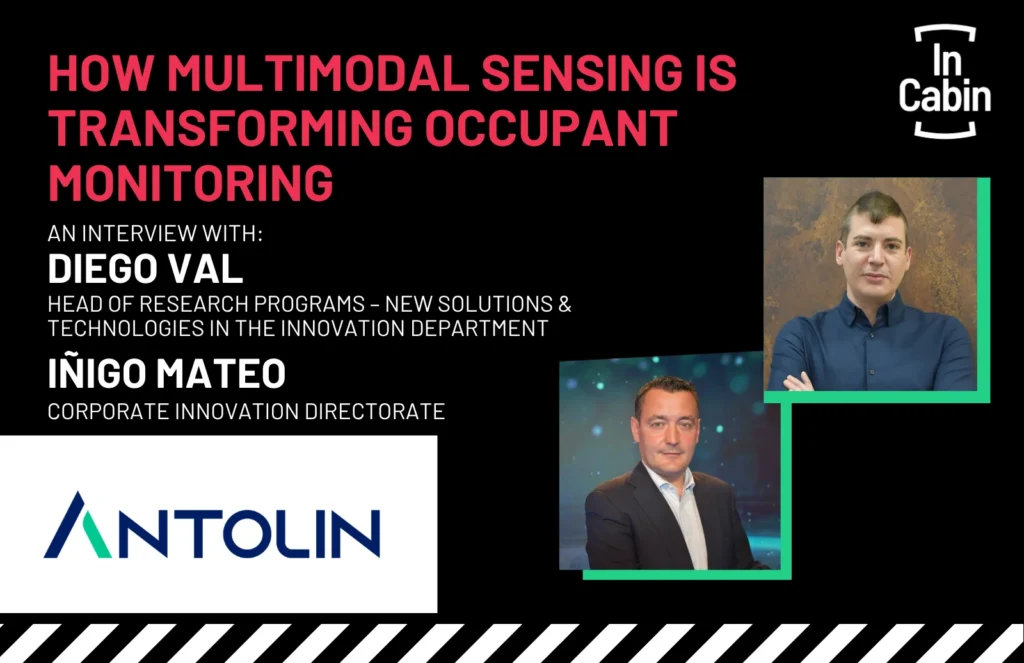
Understanding the occupant is moving beyond traditional camera-based monitoring.
Radar, physiological sensing, audio and vision can work together to build a richer picture of a person’s physical, cognitive and emotional state, opening new possibilities for safety, wellbeing and personalisation. Diego Val, Head of Research Programs – New Solutions & Technologies in the Innovation Department at and Iñigo Mateo, Corporate Innovation Directorate at Antolin, discuss how multimodal sensing and sensor fusion could enable more robust occupant monitoring, and the challenges of integrating these technologies seamlessly into the vehicle interior.
How Hand-Tracking Is Shaping the Future of In-Cabin Monitoring
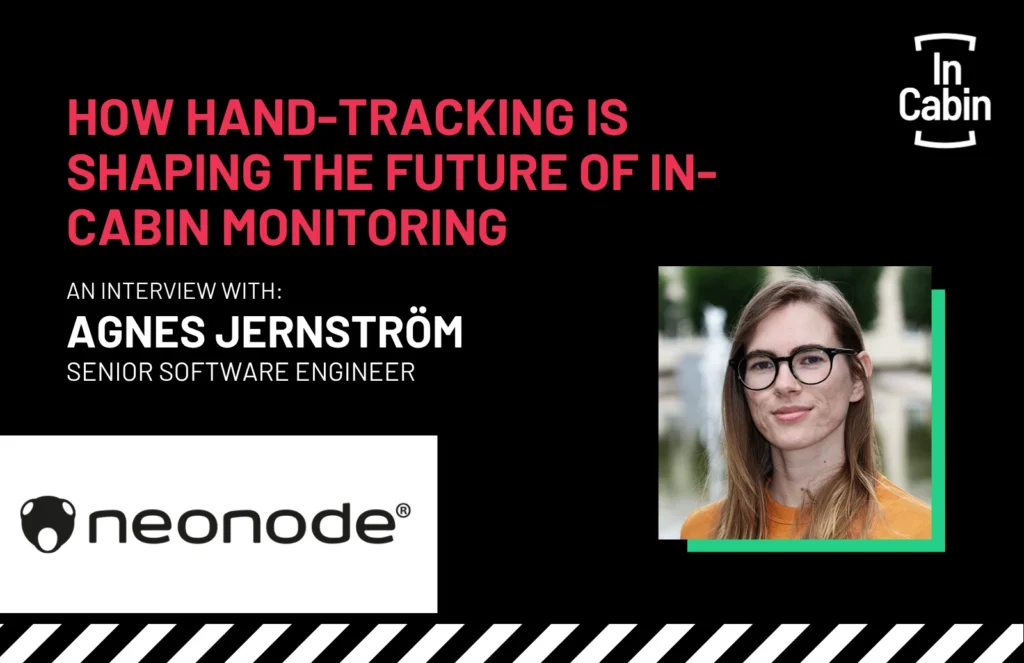
From detecting distraction to predicting driver intent, hand-tracking is becoming an increasingly valuable part of the intelligent cockpit.
As in-cabin monitoring evolves beyond traditional gaze and facial analysis, advances in computer vision are unlocking new ways to understand driver behaviour and create safer, more intuitive human-machine interfaces. In this interview, Agnes Jernström, Senior Software Engineer at Neonode, explains how hand-tracking is helping to advance occupant monitoring and the next generation of in-cabin AI.
CorrActions at InCabin USA: The Future of Cognitive Monitoring

At InCabin USA 2025, CorrActions CEO Ilan Reingold will showcase a breakthrough in cognitive driver monitoring: detecting “mind-off” states—even when the driver’s hands are on the wheel and eyes on the road. Using software-only micro-motion sensing, CorrActions’ approach moves beyond cameras to detect subtle motor signals that reveal real-time cognitive impairment. In this exclusive video Q&A, Reingold shares how the system works, its validation journey, and what to expect from CorrActions at the show.