
AI Agents Are Redefining the Future of the Software-Defined Cockpit
From voice-first interaction and intelligent assistants to AI-optimised hardware, the next generation of automotive cockpits will be built around agentic AI.
Yu Yang, Principal Lead Analyst – Automotives & Robotics at Yole Group and Advisor on the InCabin China Advisory Board explores how this shift is changing vehicle architecture, semiconductor requirements and the future of human-vehicle interaction.
Auto Audio Engineering Guide – From Research at AES (Part 1)
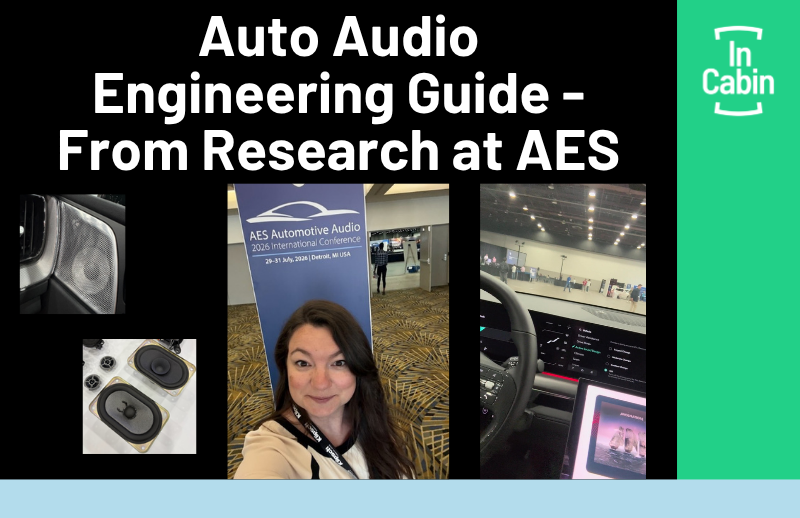
Sara explores the latest automotive audio trends, technologies and insights from the AES Automotive Audio 2026 International Conference in Detroit.
The Future of Automotive Interiors Through a Global UX Lens

Electrification, software-defined vehicles, artificial intelligence, and evolving regulations are reshaping not only how vehicles are engineered, but also how customers experience them.
At the same time, consumer expectations are becoming increasingly regional. Markets such as Europe, North America, and China are evolving at different speeds and often prioritise different aspects of the mobility experience. For designers, understanding these cultural, technological, and behavioural differences is becoming just as important as keeping pace with the latest innovations. Against this backdrop, here are my thoughts on four key topics shaping the future of automotive interiors.
Safety-Certified In-Cabin Architectures: From Concept to ISO 26262 Evidence

As in-cabin systems become more sophisticated, demonstrating functional safety is no longer just about meeting compliance requirements.
Modern software-defined vehicle architectures demand safety to be built into the platform from the very beginning, with careful attention to partitioning, isolation, verification and traceability. In this interview, Ofra Bechor, Regional Field Application Engineer at Green Hills Software, explains the architectural principles behind safety-certified in-cabin systems, the realities of ISO 26262 assessment, and how development teams can reduce certification effort while building scalable, future-ready platforms.
The Shift to Centralized Radar Processing for Software-Defined Vehicles

Modern vehicles are rapidly becoming software-defined, and with that shift comes a new expectation for perception: higher fidelity sensing, lower latency decision-making, and a platform that can scale across trim levels and regulatory regions without reinventing the hardware each time. Radar sits at the center of this evolution because it delivers robust perception in conditions where other sensors can degrade- fog, rain, snow, spray, and low light- making it a foundational technology for next-generation ADAS and automated driving stacks.
Building the Unified AI Stack for Software-Defined Vehicles
As vehicles become increasingly software-defined, the challenge is no longer adding more AI features- it’s creating an architecture that allows them to work together.
In this interview, Natalie Stormanns, Head of Infotainment and Digital Experience at MHP – A Porsche Company, explores why unified AI stacks, centralized compute, and integrated vehicle and cabin data are becoming essential to delivering safer, more intelligent, and more personalised driving experiences.
A First-Time Look at CES: What It Revealed About the Future of ADAS
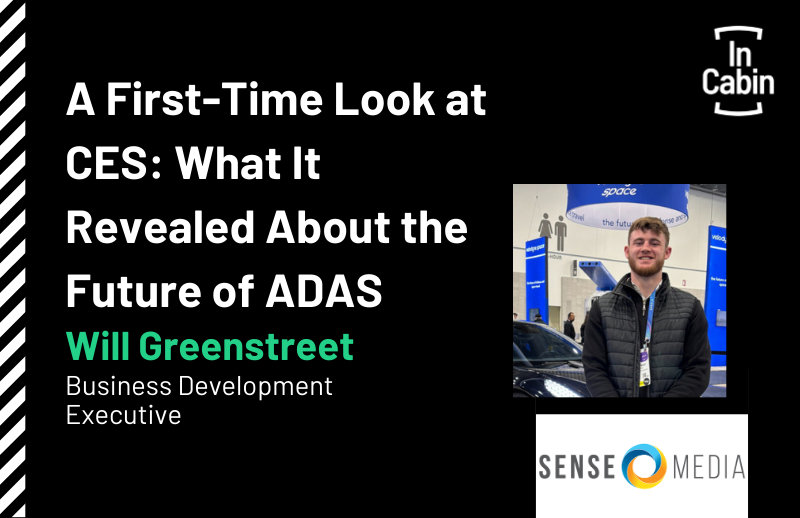
Will shares his CES experience, discussing the progress and innovations of manufacturers within ADAS, AV, In-Cabin, and more Automotive tech.
Setting the Stage: Keynotes Exploring the Future of In-Vehicle Tech at InCabin USA 2025
Get ready to experience the future of automotive innovation at InCabin USA 2025, taking place from June 10–12 at Huntington Place in Detroit.
The technical keynote sessions will feature industry leaders from Aptiv, General Motors, Tobii, Valeo, and Toyota, who will delve into cutting-edge topics including AI-driven vehicle intelligence, human-centered design, and immersive in-car experiences.
Announcing the InCabin USA 2025 Full Agenda

This year’s event, taking place from June 10th-12th at Huntington Place, Detroit, will take a deep dive into the future of in-cabin technology.
From cutting-edge driver monitoring and occupant sensing, to AI-driven HMI advancements and immersive user experiences, this technical agenda features expert-led sessions, insightful keynotes, and thought-provoking panel discussions that will explore all the most critical topics.
Speaker Spotlight: Martin Krantz, CEO of Smart Eye
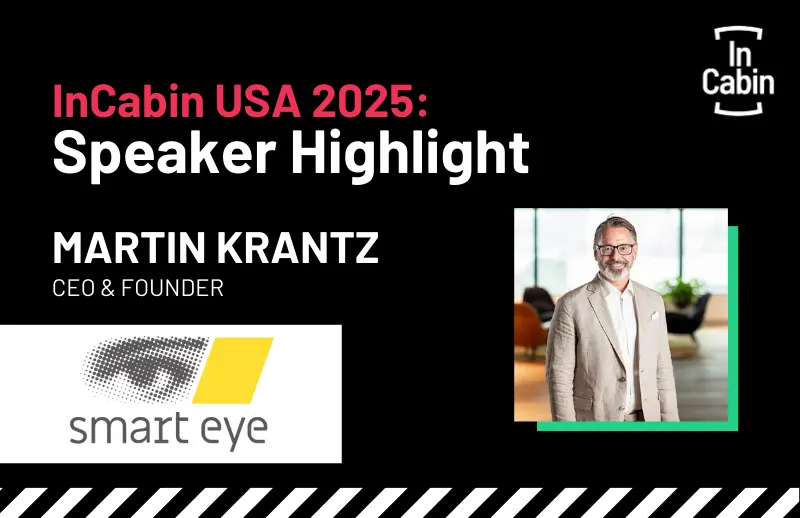
Martin Krantz, CEO of Smart Eye, will take to the InCabin stage this June, to share his insights on ‘Building a Safer Future with Software-Defined Vehicles and AI’. In this blog, see what you can expect from his session, and learn a bit more about his expertise.