
InCabin Europe 2026 – Press Conference Recap
Read more about the latest automotive interior sensing developments announced at InCabin Europe 2026.
What Comes Next for DMS+OMS: A Conversation with Tobii

We spoke to Carmen Pătrașcu, who leads Tobii’s interior sensing Sales and Marketing, about what comes after the world’s first single-camera DMS+OMS solution reaches the road, and how broader adoption can open the next chapter of interior sensing.
As Head of Sales and Marketing, Carmen works where Autosense technology meets the market. Her focus is not only on turning complex engineering into a clear proposition, but also on understanding what different OEMs and Tier 1s need to move from interest to implementation.
The Shift to Centralized Radar Processing for Software-Defined Vehicles

Modern vehicles are rapidly becoming software-defined, and with that shift comes a new expectation for perception: higher fidelity sensing, lower latency decision-making, and a platform that can scale across trim levels and regulatory regions without reinventing the hardware each time. Radar sits at the center of this evolution because it delivers robust perception in conditions where other sensors can degrade- fog, rain, snow, spray, and low light- making it a foundational technology for next-generation ADAS and automated driving stacks.
InCabin Europe 2026: Top Agenda Picks

Experts will share their expertise at InCabin Europe 2026. Here’s some of the top sessions with Aptiv, NIO, NXP, Minieye & more…
Building the Unified AI Stack for Software-Defined Vehicles

As vehicles become increasingly software-defined, the challenge is no longer adding more AI features- it’s creating an architecture that allows them to work together.
In this interview, Natalie Stormanns, Head of Infotainment and Digital Experience at MHP – A Porsche Company, explores why unified AI stacks, centralized compute, and integrated vehicle and cabin data are becoming essential to delivering safer, more intelligent, and more personalised driving experiences.
Hot Topics: The Top 5 Sessions from InCabin USA 2026
Recap the top sessions from InCabin USA 2026, see the latest advancements, challenges and solutions within the In-Cabin Monitoring fields.
The Six Trends Defining the Future of Automotive Sensing
The leading ADAS, AV and in-cabin technology conference returned to Detroit this June – here are the key themes from the day…
InCabin USA 2026 – Press Conference Recap
Learn more about the latest automotive technology developments announced at the InCabin USA 2026 conference.
5 Star Ratings: The Best CES 2026 Demos

Sara guides us through her CES 2026 experience, highlighting the demos that really felt a cut above the rest.
A First-Time Look at CES: What It Revealed About the Future of ADAS
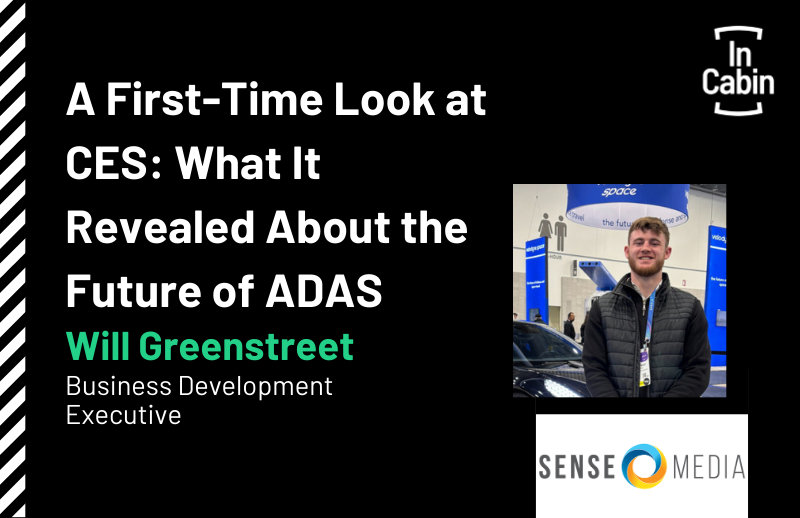
Will shares his CES experience, discussing the progress and innovations of manufacturers within ADAS, AV, In-Cabin, and more Automotive tech.