
Electrification, software-defined vehicles, artificial intelligence, and evolving regulations are reshaping not only how vehicles are engineered, but also how customers experience them.
At the same time, consumer expectations are becoming increasingly regional. Markets such as Europe, North America, and China are evolving at different speeds and often prioritise different aspects of the mobility experience. For designers, understanding these cultural, technological, and behavioural differences is becoming just as important as keeping pace with the latest innovations. Against this backdrop, here are my thoughts on four key topics shaping the future of automotive interiors.


1. How are Chinese and European expectations of vehicle interiors diverging?
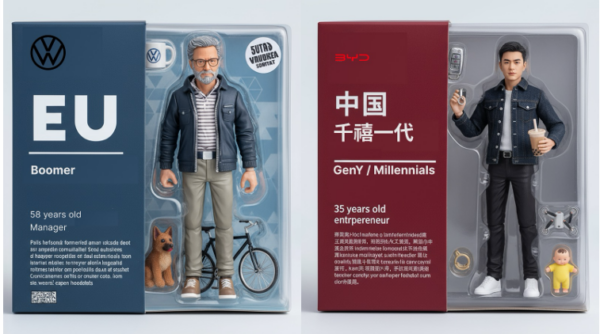
One of the biggest drivers behind the different expectations is the customer demographic.
Compared with Europe, and Germany in particular, the average car buyer in China is significantly younger and has grown up in a fully digital environment. Many are first generation car owners, with fewer long-standing brand loyalties or expectations shaped by decades of automotive tradition. Instead, their benchmark is often the experience delivered by smartphones, consumer electronics, and internet services.
That doesn’t mean customers in the two markets want fundamentally different vehicles. Safety, usability, practicality, comfort, and quality remain universal priorities. However, each market places different emphasis on what creates value beyond those fundamentals.
European customers often prioritise intuitive operation, driving confidence, craftsmanship, and long-term reliability. Chinese consumers generally place greater importance on digitalisation, intelligent features, personalisation, flexibility of interior space, and experiences that express personality or adapt to different lifestyles.
As software increasingly defines the ownership experience, understanding these differences becomes just as important as understanding regional regulations or vehicle segments.
2. What role does digital technology play in shaping emotional attachment to a vehicle?
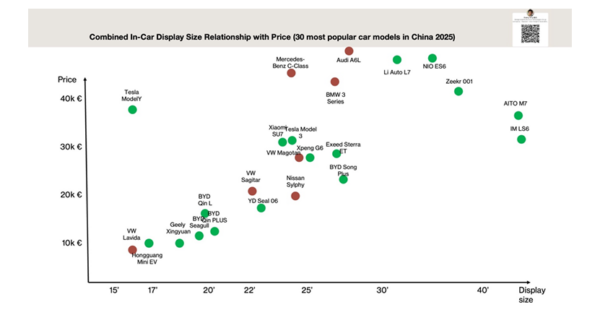
Digital technology is increasingly influencing how people perceive and experience mobility, but emotional attachment takes different forms across different markets.
The demographic differences between Europe and China naturally lead to different expectations of what a vehicle should represent. For many traditional buyers, emotional attachment has historically been built through driving dynamics, engineering, craftsmanship, or the heritage of a particular brand.
For younger digital-native consumers, emotional connection is increasingly created through everyday interactions. The vehicle becomes part of a wider digital ecosystem, seamlessly connecting with smartphones, smart homes, online services, and AI powered experiences. Personalisation, adaptive interfaces, intelligent voice assistants, entertainment, and continuous software updates all contribute to making the vehicle feel more personal and responsive over time.
Ultimately, digital technology is shifting the conversation from simply owning a vehicle to experiencing mobility. The strongest emotional connection is no longer built solely through the product itself, but through the quality and continuity of the experience it delivers throughout ownership.
3. How should designers balance screen-based experiences with physical interaction?
The discussion should no longer be framed as buttons versus screens. Instead, it is about choosing the most appropriate interaction method for each task.
We are already seeing regulations influence cockpit design. Initiatives such as the latest Euro NCAP recommendations, together with Chinese regulations including GB 4094 and GB 7258, are encouraging manufacturers to reintroduce dedicated physical controls for frequently used and safety-critical functions. Physical interaction remains the fastest and least distracting solution for many driving-related tasks.
However, this does not mean vehicle interiors will contain fewer displays. In fact, the opposite appears to be happening.
Across recent vehicle launches, we continue to see more digital surfaces being integrated into the cabin, including passenger displays, rear entertainment screens, panoramic displays, smart mirrors, and various projection technologies. Displays are becoming increasingly specialised, serving navigation, entertainment, productivity, passenger experiences, and contextual information rather than acting as a single central interface.
The future cockpit is therefore likely to become more multimodal, combining physical controls, touch interfaces, voice interaction, AI assistance, gesture control, haptic feedback, and head-up displays into one cohesive user experience.
4. What interior design trends do you expect to become mainstream within five years?
Several technologies are converging to fundamentally reshape the vehicle interior.
One of the most significant developments will be the widespread adoption of next-generation head-up display technologies. From large panoramic HUDs to augmented reality HUDs and full-windshield projection concepts, information will increasingly move away from conventional screens and become integrated into the driver’s natural field of view.
Artificial intelligence will also become a defining component of the in-car experience. Rather than functioning as simple voice control systems, future AI assistants will understand context, learn user preferences, proactively provide assistance, and coordinate interactions across navigation, entertainment, communication, vehicle settings, and connected digital services. As these systems mature, they have the potential to significantly reduce driver workload while making vehicle interactions feel more natural and conversational.
At the same time, software-defined vehicles will continue to transform interiors long after they leave the factory through over-the-air updates, new digital features, and evolving user experiences.
Ultimately, I believe the most important trend is not the introduction of any single technology, but the convergence of intelligent software, AI, immersive display technologies, and thoughtful human-centred design. The interiors of the future will be defined by how seamlessly these elements work together to create safer, more intuitive, and more meaningful mobility experiences.
Interested in exterior vehicle sensing technology?
With a pass to InCabin Europe, you’ll also get full access to our
co-located sister event, AutoSens. Find out more here >>